First business – from idea to success [Led by: Roman Broszczak, Miłosz Dzenis] [registration closed]
27-28/10/2025, 8:00-11:00, S6
The workshops "First Business – From Idea to Success," aimed at youth aged 16–18 from the best high schools in Poznań, are designed to inspire, educate, and practically prepare them for their future entrepreneurial path. Over the course of two days, participants will learn both the theoretical foundations of running a business and go through a simulation of the real challenges faced by a beginner entrepreneur in Poland.
The educational goal of the workshops is to foster an understanding of the fundamentals of entrepreneurship by showing how a company operates from the moment of its establishment, through its first year of operation, up to stabilization and development. An important element is also financial education for the youth – explaining what revenues, costs, and profits are, why saving is fundamental, and why getting into debt at a young age is a serious mistake. Participants will gain legal awareness through an introduction to the basic obligations and rights of an entrepreneur in Poland, such as setting up a business, taxes, ZUS (Social Insurance Institution) contributions, and choosing a legal form. They will also develop decision-making skills, learning to make choices under conditions of limited resources and time pressure, and shape an entrepreneurial mindset, understood as a way of thinking, problem-solving skills, and perseverance.
The practical goals of the workshops include a business simulation – through exercises and scenarios, participants will experience challenges related to budget management, hiring, marketing, and crisis response. In a safe testing environment, the youth will be able to make mistakes without real consequences, which will allow them to better remember key lessons. An important element will also be building teamwork skills – working in teams reflects the realities of company management, where communication, negotiation, and joint decision-making are necessary. Additionally, participants will develop soft skills, such as critical thinking, mental resilience, flexibility in the face of change, and responsibility for decisions made.
The socio-economic goals of the workshops focus on encouraging youth toward entrepreneurship, by showing that owning a business is not only a risk but also a huge opportunity for independence and real influence on the environment. Participants will be educated in the spirit of conscious citizenship and consumption, understanding where money comes from, how the economy works, and why their activity matters to the entire country. The workshops are also intended to build future leaders – young people ready to start companies, create jobs, and support the development of the Polish economy. An important aspect is also promoting social responsibility, which means making them aware that entrepreneurship is not just about financial profit, but also a contribution to social, local, and economic development. The whole is complemented by promoting a mindset of saving and sensible financial

The role of a leader in a growing organisation [Led by: Kamila Wrocińska]
28/10/2025, 15:00-17:00, S6
The workshop program includes a discussion of the stages of organisational development and their impact on the flow of information, as well as changes in work and collaboration as a company grows. Participants will learn when and why teams become dysfunctional, what causes their ineffectiveness, and how this translates into a lack of results in the organisation's operations. The topic of the key characteristics of an effective leader according to John C. Maxwell will also be addressed, along with the communication differences that leaders face in developing organisations, especially when the team is not functioning correctly and achieving understanding becomes a challenge.
Negotiations that change the game – how to say “no” to hear a true “yes” [Led by: Mikołaj Tarnawski]
28/10/2025 13:15-14:45, S6
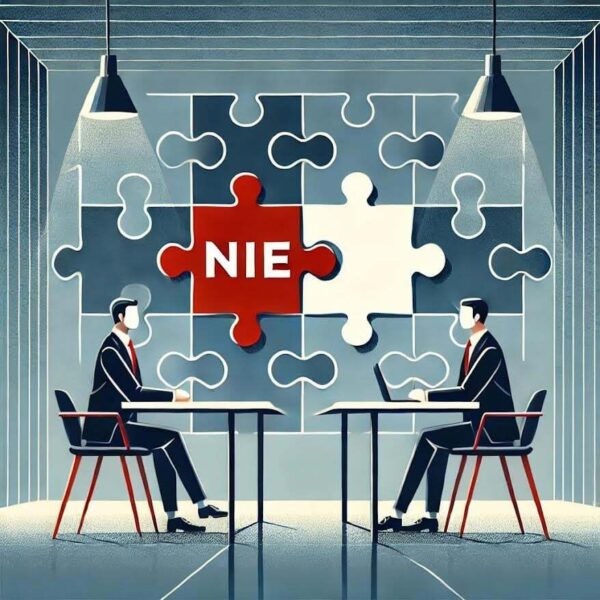
In the world of business, but also in private life, an early "yes" is often a worthless word. An effective negotiator knows that the path to a lasting agreement paradoxically begins with "no." During the workshop, participants will learn a practical approach that allows them to conduct conversations without emotional pressure, tricks, or manipulation.
The goal of the workshop is to make participants aware that the true power of a good negotiator does not lie in intellectual persuasion, but in good decisions and the ability to exert ethical influence. Participants will learn how to negotiate without the need to "sell" themselves and their solution, conduct conversations in a way that minimizes stress and maximises control over the process, avoid basic mistakes, gain respect and trust in a conversation, and communicate in a way that allows them to discover the true motivations and needs of the other party.
The workshop takes the form of an interactive discussion with exercises that will allow participants to understand and experience how the dynamics of a conversation change when we build bridges instead of walls between the speakers.
Social engineering and disinformation – how to recognize and counter the most dangerous manipulations in the digital world? [Led by: Mateusz Piątkowski]
28/10/2025, 11:30-13:00, S6
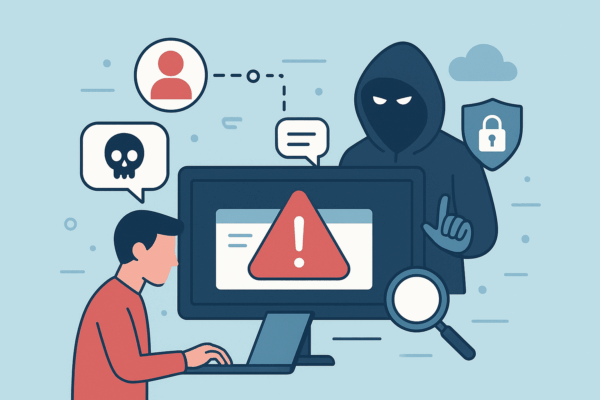
This workshop focuses on the two most common threats in cyberspace: social engineering attacks (e.g., phishing, spear phishing, deepfake) and disinformation (fake news, narrative manipulation, algorithmic content amplification). Participants will learn about the psychological mechanisms utilized by cybercriminals and the techniques through which false information gains popularity.
The goal of the workshop is to make participants aware of the scale and consequences of threats related to social engineering and disinformation, to show in practice how phishing and manipulative campaigns work, to equip participants with tools and techniques for recognizing manipulation, and to encourage the building of a culture of cyber hygiene and critical thinking within organizations.

The AI revolution – how it will affect work and business [Led by: Paweł Majewski]
27/10/2025, 16:30-18:00, S6
The introduction to Artificial Intelligence will cover issues related to the AI revolution – what is worth knowing to use it effectively, how artificial intelligence and language models work, what their types are, and the most important areas of application. Participants will learn about the origins of the global boom in generative AI and how tools like ChatGPT and other language models function.
Navigating the world of AI tools requires familiarity with rankings and comparison sites that help in choosing the right solutions, as well as knowledge of which generative AI models to use for different tasks. The operating principles of AI assistants and agents will be discussed, along with key rules for communicating with the tools and the most important trends for 2025–2030, such as multimodality, real-time AI, and the development of AGI.
From a business perspective, artificial intelligence opens new possibilities for automating the activities of companies and institutions. Examples of AI implementations in Poland and around the world will be presented, along as well as forecasts and analyses, including Gartner's predictions and conclusions from the MIT report regarding a repeat of the "dot-com" bubble. Implementation strategies recommended for enterprises will also be discussed.
Safe and responsible use of AI is also an essential element – protecting confidential data, information security, and knowledge of the most important legal regulations. Participants will learn about the threats resulting from inappropriate use of AI tools and ways to minimise the risks associated with their application.
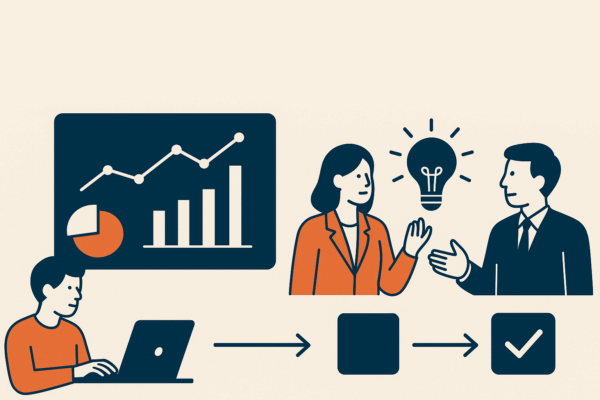
From Data to decisions. How cooperation with think tanks supports public policy and business strategy processes [Workshop Partner: WiseEuropa]
27/10/2025, 14:45-16:15, S6
During the meeting, we will look at the role of think tanks in shaping public debates, policies, and development strategies. Participants will learn about the benefits that stakeholders – public administration or business – can gain from cooperating with analytical centers, and why it is worthwhile to engage in their activities. As part of the workshops, the results of a study on the present and future of the Polish think tank sector will be presented, and the latest WiseEuropa report will be premiered. The meeting will be an opportunity to exchange experiences and reflect on the potential for cooperation between the world of knowledge and political-economic practice.

Critical thinking in leaders’ decisions – how to make accurate decisions in a world of complexity and change [Led by: Maciej Winiarek]
27/10/2025, 11:30-14:30, S6
Critical thinking is the ability to analyze information, recognize hidden assumptions, and make decisions based on facts rather than habits or emotions. In an era of data overload and time pressure, this competency is becoming the foundation of effective leadership. During the workshop, participants will learn practical critical thinking tools that will help them avoid cognitive pitfalls and make more accurate strategic decisions—both in business and in professional life.
Workshop goals: understanding what critical thinking truly is and why it is crucial for a leader's work; identifying the most common cognitive biases in the decision-making process; applying critical thinking tools to open new perspectives and improve risk analysis; building a habit of reflection before making a key decision.